South Korea Just Made AI a Public Utility: What the Rest of Us Can Learn

Book a hospital appointment in Seoul. Dispute a tax notice in Busan. Find an apartment in Daegu. The model answers, the state pays the compute bill, and no one sees a token meter. South Korea is rolling out free, uncapped generative AI access to every citizen, roughly 52 million people, through government infrastructure.
The programme is called AI for All. Three operators were named around August 2026: SK Telecom, KT, and Kakao. Beta testing starts this month, with wider rollout promised later in the year. Nothing has reached citizens yet.
Every government talks about AI sovereignty. South Korea is the first at scale to wire it into daily civic life, and it has spent two years building it.
How They Got Here
The National Assembly passed the Framework Act on Artificial Intelligence on 26 December 2024. It was promulgated the following January and came into force on 22 January 2026, which makes it the world's second comprehensive AI law after the EU AI Act.
The model-building came from the Ministry of Science and ICT, on a separate track. The National AI Committee launched in September 2024 to coordinate across ministries, universities, and private firms, and a National AI Strategy Committee under the President followed. In August 2025, MSIT selected five teams for the independent AI foundation model project: Naver Cloud, SK Telecom, LG AI Research, NC AI, and Upstage. Combined support ran to roughly 200 billion won. The target was blunt and public: reach 95% of leading global model performance.
The weights are out. Not under a single government banner, but under each team's own organisation, with open releases in the 700B class landing during 2026.
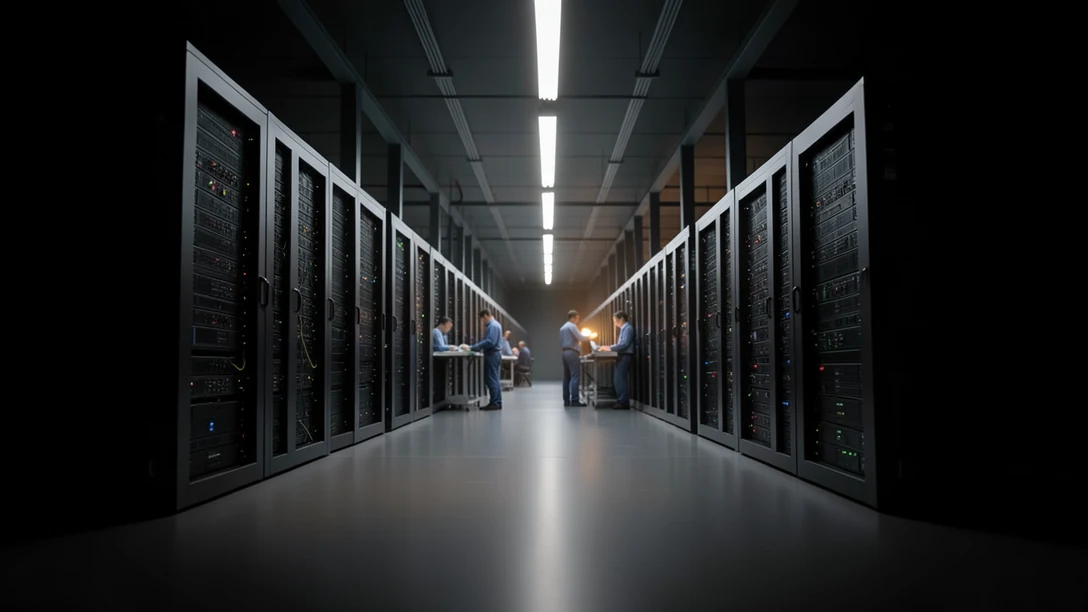
Then the consumer layer, which is a different set of companies again. The five model-builders are not the three operators. SK Telecom appears on both lists; KT and Kakao do not build the models they will serve. The state is distributing up to 512 Nvidia B200 chips across the three operators to run it.
The 80% Floor

Operators in the programme must route at least 50% of queries through their own certified Korean foundation model, and another 30% through other Korean models. That is an 80% domestic floor, written into the terms and enforced at the router.
Read it as a subsidy and it looks ordinary. Read it as a mechanism and it is unusual. Most countries that want a domestic AI industry fund one, then watch the funded thing lose to a cheaper American API on the merits. Korea has instead guaranteed demand at the point of serving. A Korean model does not have to win a procurement bake-off to get traffic. It gets 50% of the national consumer workload by rule, and the remaining fifth is where the foreign models compete.
What It Costs and Who Pays
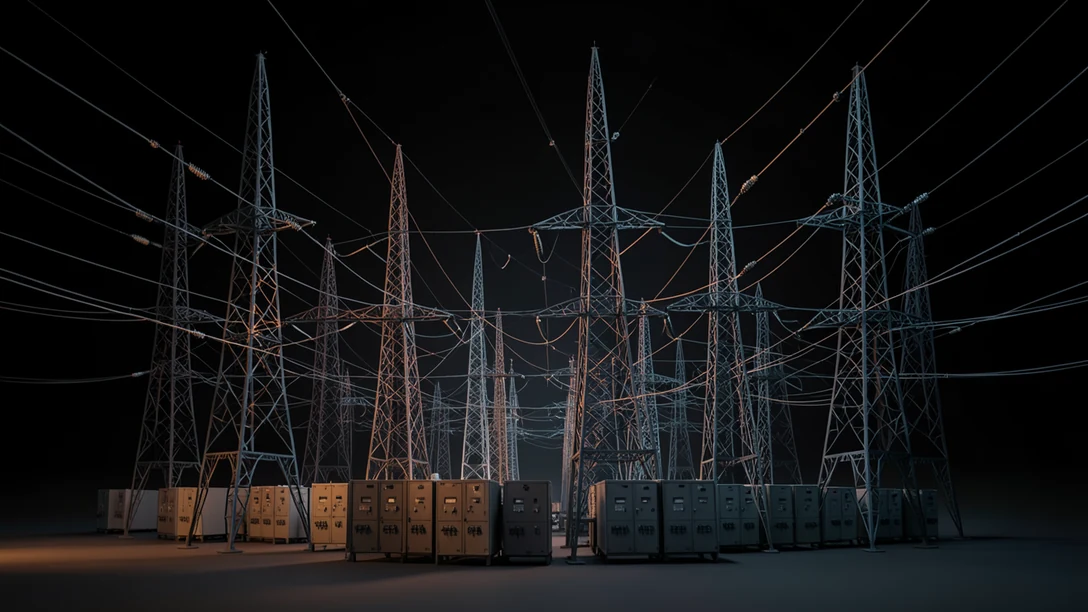
"Free to citizens" means the state absorbs inference at national scale. The headline number is public: roughly 10 trillion won, about $7.2 billion, allocated to AI for 2026. That is around triple the 2025 figure. What is not public is the slice that goes to serving AI for All, as opposed to the foundation model programme, the chips, or the research institutes.
Fifty-two million eligible citizens. Assume a conservative 15 interactions per user per month: appointment booking, form help, dispute drafting, search. That is 780 million requests. At an average of 500 tokens per request, and Korean is token-dense where English equivalents run 300 to 350, you are looking at 390 billion tokens a month. At current market rates for B200-class hardware, that is a serving bill in the low tens of millions of dollars a year, before networking, storage, and the identity layer.
Against a 10 trillion won AI budget, the serving layer is not the expensive part. The chips are. The recurring cost of running a national model service is small next to the one-off cost of the hardware to run it on. Inference looks like a utility bill. Capacity looks like a power station.
The identity layer authenticates every request against the national digital ID system. Queue management strains at peak, tax deadline and university enrolment. Every public-sector request generates a compliance audit trail. Beta is when those stop being predictions.
What Builders Do With a Free Baseline
Korean startups get a baseline that exists whether they pay for it or not. The question stops being whether they can afford inference and becomes what they put on top of it: fine-tunes for verticals whose training data sits in private silos rather than the public crawl, retrieval over proprietary corpora, orchestration that submits the form and chases the case number, dedicated capacity for anyone who needs better than public-sector SLAs.
The 80% floor sharpens all of it. If half the national workload is legally routed through certified Korean models, the adaptation layer worth building sits on those models, not on a frontier API.
The Trap Nobody Talks About
Centralized inference is a single point of censorship, surveillance, and failure. The Korean model solves sovereignty from US hyperscalers; it concentrates power in a small number of domestic operators running on state-allocated hardware, under a governance statute written for risk and trust rather than for this.
South Korea is a democracy with strong institutions. Any jurisdiction copying this playbook needs to answer the governance question before the first GPU arrives: who decides what the model refuses, who sees the logs, and what judicial review exists when the model gets it wrong?
On the Korean programme, those answers are not published. No refusal-rate reporting, no appeals process, no retention policy for the query logs the identity layer necessarily produces. That is the part to watch during beta, because a policy that arrives after a service has 52 million users is a policy written under pressure.
The Playbook Others Can Steal
Municipalities, states, provinces, and any organization with 10,000+ seats can run this playbook. The minimum viable version:
- One sovereign model. Not five. Pick the general-purpose base that fits your jurisdiction's language and legal framework. Fine-tune it on your statutes, forms, and procedural guidance. Publish the weights.
- One inference cluster. Sized for your peak concurrent users, not your total population. A US state of 5 million needs roughly a tenth of the Korean capacity. Lease the GPUs. Own the weights. Keep the data in-region.
- One identity layer. Your existing digital ID system, such as a driver's license portal, tax login, or library card. The model doesn't need to know who you are. The gateway does.
- One SLA. Define what "utility" means. Uptime. Latency. Refusal transparency. Appeal path. Publish it. Measure against it.
Law passed December 2024. Model programme funded August 2025. Operators named August 2026. Beta September 2026. Two years from statute to first users, with the model work running in parallel rather than waiting on the law. A focused team with political cover and a $50M compute budget could plausibly ship a v1 inside eighteen months. The hard part isn't the model. It's the procurement, the identity integration, and the governance charter. The model is the only piece you can download today.
What Comes Next
The next six months are the whole experiment. Beta runs this month against real citizens with real tax deadlines, which is the first time anyone finds out whether a national queue holds. Wider rollout is promised before the end of the year. The 80% floor gets its first real test, and with it the answer to whether a guaranteed domestic share produces models people actually prefer. The second year is the harder test, when the novelty traffic has gone and the habitual traffic has not.
AI as a public utility isn't a white paper anymore. It's a budget line, 512 accelerators spread across three carriers, and, in a few weeks, a citizen in Gwangju getting their tax dispute drafted at 11 PM on a Sunday without pulling out a credit card.
The rest of us have the same hardware available. The same open weights, including Korea's. The same open-source serving stack. What we've mostly lacked is the decision to treat inference as infrastructure instead of a vendor relationship. South Korea made that decision. The code is public. The playbook is visible. The next move is ours.
More from the blog →